See what is happening.
Main meter, submeters and generation data in one place. Consumption by machine, zone or site.
See consumption, solar generation and costs together. Identify losses, then coordinate your site's operations with intelligent control.
30 minutes · focused on your site · with a clear next step
Companies that have already entrusted projects to Scepi.
Explore our references



Scepi Smart EMS is Scepi Consulting's modular energy management system for business and industrial sites. It combines energy data collection, consumption and generation analysis, and control of supported equipment. It can also build on existing meters, inverters and building management systems.
Main meter, submeters and generation data in one place. Consumption by machine, zone or site.
Baseload, demand peaks and unusual deviations. Turn data into traceable costs and a prioritised list of actions.
Coordinate flexible loads, generation and storage within agreed operating limits.
Track the impact of your actions. Assess savings against the baseline and operating conditions.
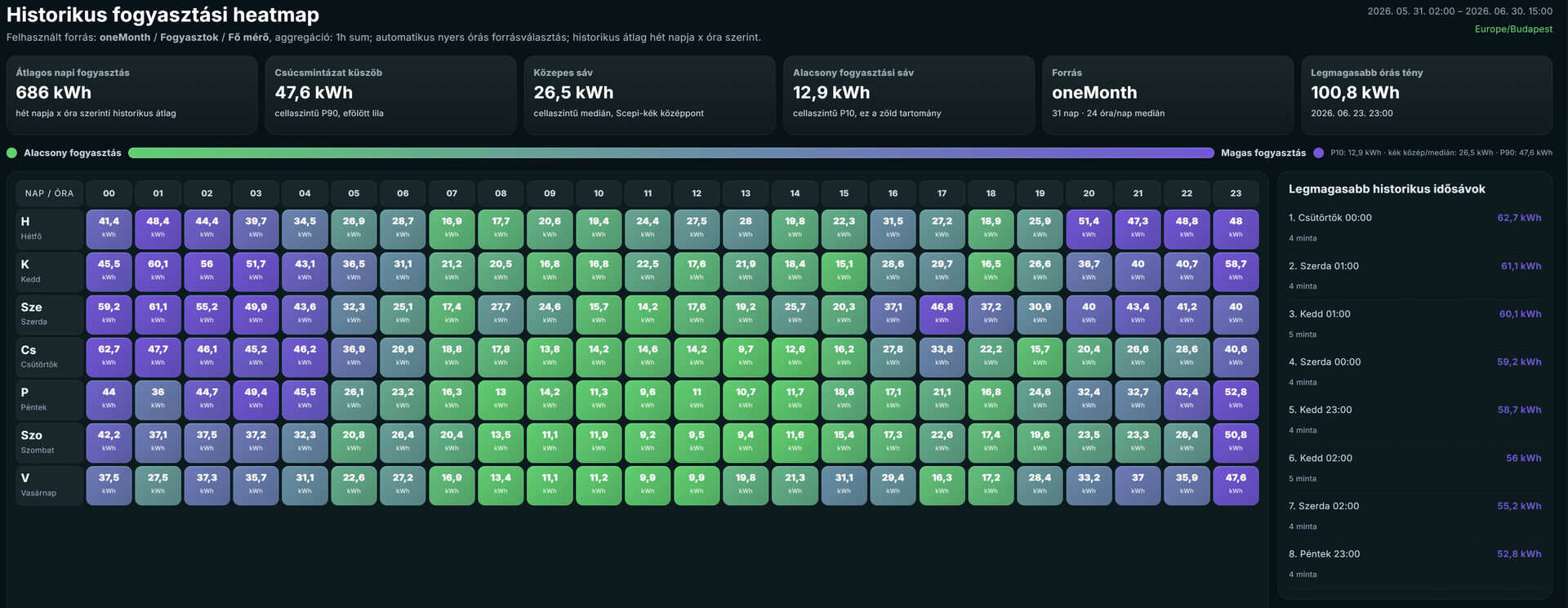
A consumption heatmap immediately reveals periods of recurring demand. It provides a starting point for investigating shifts, machines or baseload outside working hours.
Start with the most important measurement points. Add analysis, then introduce automation where operating conditions and data justify it.
Consumption, generation and demand on a shared timeline. Identify the machines, zones and periods that drive costs.
Submetering solutionsPrioritise and schedule loads to suit contracted capacity, available capacity and production operating limits.
Managing peak demandSmart export-limiting protection using pyranometer measurements. When potential solar generation provides a surplus, it starts loads or dynamically charges a battery before curtailing generation, while respecting grid constraints.
Smart Vissz-Watt moduleSchedule consumption and battery operation using market price signals, in line with the energy supply contract and operating limits.
HUPX control moduleThe operation of supported batteries, EV chargers and other flexible loads can be adapted to demand, prices and the required reserve.
Storage and charging control detailsMeters, BMS, PLC, HVAC and operational systems on a shared data foundation. Local control logic adapted to the existing infrastructure.
PLC, BMS and EMS integrationAn annual software licence for each site. From basic visibility and decision support to controlled automatic intervention.
Ideal when your first priority is a reliable, shared view of your site's energy data.
For using measured data to plan, compare and track energy-saving measures.
For coordinated control of supported inverters, storage and flexible loads.
Hardware, implementation, integration, support and operations are separate items. HUPX and Smart Vissz-Watt are optional modules. The HUPX annual fee is based on the customer’s annual electricity consumption, with a minimum of 250,000 HUF per year excluding VAT. Detailed features, conditions and current prices are available on the plans page.
Different processes, different measurement points. The shared goal is to view and manage energy consumption in the context of site operations.

Illustrations of applications for Scepi solutions.
Machines, shifts, compressors and process loads.
Water quality, circulation and energy monitoring for fish farms.
Pumps, process conditions and specific energy consumption.
Temperature events, batch traceability and quality data.
Energy and water consumption linked to machines and wash cycles.
Pump branches, flow, pressure and energy throughout the season.
Compressors, defrosting, door openings and refrigeration loads.
Coordinate warehouse zones, lighting, building services and chargers.
Refrigeration, opening hours and energy-use differences across stores.
Building services, hot water and amenities in the context of occupancy.
BMS, tenant use, comfort and consumption outside working hours.
All 11 industry pages include specific operational examples, metrics and an editable ROI calculator to help you take the first step. Related technology: Lanzo–Scepi transformer monitoring.
We start with the existing infrastructure and a clearly defined operational question. You can then make expansion decisions based on measured data and experience.
Let's discuss your site
Review major loads, measurement points, energy prices, existing systems and operating limits.
Connect the required points, check data quality and establish a baseline for comparison.
Prioritise opportunities. For control functions, define approved rules, manual override and commissioning checks.
Track the impact, refine settings and select the next measurement point or site.
Good energy management fits the site. These are also the questions we use to start the discussion.
An EMS collects and interprets energy consumption and local generation data. With the appropriate plan and implemented integrations, Scepi Smart EMS also coordinates the operation of supported equipment. Measurement, decisions, control and tracking results can therefore become part of a single process.
Yes, through supported communication interfaces such as Modbus, MQTT or REST APIs. We assess compatibility with the specific meter, PLC, inverter or building management system. Integration and implementation are separate project tasks; not every device connects automatically.
Yes. EMS Monitor provides visibility, while Executive supports analysis and decisions. Autopilot adds active control capabilities. Implementation can be gradual: measurement and analysis first, followed by justified automation.
Savings depend on the consumption profile, energy prices, local generation, controllable loads and the measures implemented. A specific percentage or payback period can only be estimated from an assessment based on site data. We measure the results against the baseline and changing operating conditions.
Monitor, Executive and Autopilot are annual software licences for each site. Hardware, implementation, integration, support and operations are separate items; HUPX and Smart Vissz-Watt are separately selectable modules. The plans and current pricing page includes a detailed comparison and calculator.
Control is based on agreed operating limits, priorities and manual override options. Local operation, redundancy, uninterruptible power and the support level are defined in the specific system design and service agreement. Round-the-clock human incident handling is a separate service.
Measurement time series, consumption breakdowns and reports can support baseline definition and the tracking of measures. The EMS does not replace an audit or certification. See the ISO 50001 and real-time energy measurement page for further details.
Bring your site's questions. Together, we will identify where to measure, what needs to be understood and where intervention could make sense.
30-minute introductory discussion · no obligation
See consumption, solar generation and costs together. Identify losses, then coordinate your site's operations with intelligent control.
30 minutes · focused on your site · with a clear next step
Companies that have already entrusted projects to Scepi.
Explore our referencesScepi Smart EMS is Scepi Consulting's modular energy management system for business and industrial sites. It combines energy data collection, consumption and generation analysis, and control of supported equipment. It can also build on existing meters, inverters and building management systems.
Main meter, submeters and generation data in one place. Consumption by machine, zone or site.
Baseload, demand peaks and unusual deviations. Turn data into traceable costs and a prioritised list of actions.
Coordinate flexible loads, generation and storage within agreed operating limits.
Track the impact of your actions. Assess savings against the baseline and operating conditions.
A consumption heatmap immediately reveals periods of recurring demand. It provides a starting point for investigating shifts, machines or baseload outside working hours.
Start with the most important measurement points. Add analysis, then introduce automation where operating conditions and data justify it.
Consumption, generation and demand on a shared timeline. Identify the machines, zones and periods that drive costs.
Submetering solutionsPrioritise and schedule loads to suit contracted capacity, available capacity and production operating limits.
Managing peak demandSmart export-limiting protection using pyranometer measurements. When potential solar generation provides a surplus, it starts loads or dynamically charges a battery before curtailing generation, while respecting grid constraints.
Smart Vissz-Watt moduleSchedule consumption and battery operation using market price signals, in line with the energy supply contract and operating limits.
HUPX control moduleThe operation of supported batteries, EV chargers and other flexible loads can be adapted to demand, prices and the required reserve.
Storage and charging control detailsMeters, BMS, PLC, HVAC and operational systems on a shared data foundation. Local control logic adapted to the existing infrastructure.
PLC, BMS and EMS integrationAn annual software licence for each site. From basic visibility and decision support to controlled automatic intervention.
Ideal when your first priority is a reliable, shared view of your site's energy data.
For using measured data to plan, compare and track energy-saving measures.
For coordinated control of supported inverters, storage and flexible loads.
Hardware, implementation, integration, support and operations are separate items. HUPX and Smart Vissz-Watt are optional modules. The HUPX annual fee is based on the customer’s annual electricity consumption, with a minimum of 250,000 HUF per year excluding VAT. Detailed features, conditions and current prices are available on the plans page.
Different processes, different measurement points. The shared goal is to view and manage energy consumption in the context of site operations.
Illustrations of applications for Scepi solutions.
Machines, shifts, compressors and process loads.
Water quality, circulation and energy monitoring for fish farms.
Pumps, process conditions and specific energy consumption.
Temperature events, batch traceability and quality data.
Energy and water consumption linked to machines and wash cycles.
Pump branches, flow, pressure and energy throughout the season.
Compressors, defrosting, door openings and refrigeration loads.
Coordinate warehouse zones, lighting, building services and chargers.
Refrigeration, opening hours and energy-use differences across stores.
Building services, hot water and amenities in the context of occupancy.
BMS, tenant use, comfort and consumption outside working hours.
All 11 industry pages include specific operational examples, metrics and an editable ROI calculator to help you take the first step. Related technology: Lanzo–Scepi transformer monitoring.
We start with the existing infrastructure and a clearly defined operational question. You can then make expansion decisions based on measured data and experience.
Let's discuss your siteReview major loads, measurement points, energy prices, existing systems and operating limits.
Connect the required points, check data quality and establish a baseline for comparison.
Prioritise opportunities. For control functions, define approved rules, manual override and commissioning checks.
Track the impact, refine settings and select the next measurement point or site.
Good energy management fits the site. These are also the questions we use to start the discussion.
An EMS collects and interprets energy consumption and local generation data. With the appropriate plan and implemented integrations, Scepi Smart EMS also coordinates the operation of supported equipment. Measurement, decisions, control and tracking results can therefore become part of a single process.
Yes, through supported communication interfaces such as Modbus, MQTT or REST APIs. We assess compatibility with the specific meter, PLC, inverter or building management system. Integration and implementation are separate project tasks; not every device connects automatically.
Yes. EMS Monitor provides visibility, while Executive supports analysis and decisions. Autopilot adds active control capabilities. Implementation can be gradual: measurement and analysis first, followed by justified automation.
Savings depend on the consumption profile, energy prices, local generation, controllable loads and the measures implemented. A specific percentage or payback period can only be estimated from an assessment based on site data. We measure the results against the baseline and changing operating conditions.
Monitor, Executive and Autopilot are annual software licences for each site. Hardware, implementation, integration, support and operations are separate items; HUPX and Smart Vissz-Watt are separately selectable modules. The plans and current pricing page includes a detailed comparison and calculator.
Control is based on agreed operating limits, priorities and manual override options. Local operation, redundancy, uninterruptible power and the support level are defined in the specific system design and service agreement. Round-the-clock human incident handling is a separate service.
Measurement time series, consumption breakdowns and reports can support baseline definition and the tracking of measures. The EMS does not replace an audit or certification. See the ISO 50001 and real-time energy measurement page for further details.
Bring your site's questions. Together, we will identify where to measure, what needs to be understood and where intervention could make sense.
30-minute introductory discussion · no obligation